20 Smoothies with Superfoods You Should Be Drinking
Superfoods sound intimidating, like you need a degree in nutrition and a trust fund to afford them. Reality check: most superfoods are just regular ingredients with above-average nutritional profiles, and you can throw them in a blender without overthinking it. These 20 smoothies pack genuinely nutritious ingredients without requiring you to hunt down weird powders that cost more than your car payment.
I got into superfood smoothies after realizing that eating kale salads for breakfast was making me miserable, but blending kale with frozen mango? Actually drinkable. Sometimes you just need to trick yourself into eating healthy, and smoothies are the ultimate deception tool.
What Actually Counts as a Superfood
Before we get into recipes, let’s demystify the whole superfood thing. There’s no official definition—it’s mostly a marketing term for foods that pack a lot of nutrients into a small serving. The FDA doesn’t regulate the term, so technically anyone can call anything a superfood if they’re feeling ambitious.
That said, certain foods do legitimately contain higher concentrations of vitamins, minerals, antioxidants, or other beneficial compounds than their counterparts. According to research from the American Heart Association, foods like berries, leafy greens, nuts, and fatty fish consistently show health benefits in studies.
Common superfoods you probably already have:
- Berries (blueberries, strawberries, raspberries)
- Leafy greens (spinach, kale)
- Chia seeds and flax seeds
- Greek yogurt
- Nuts and nut butters
- Avocado
Superfoods that sound fancy but are worth it:
- Acai berries
- Spirulina
- Maca powder
- Cacao (not cocoa—there’s a difference)
- Matcha
- Turmeric
The key is using these ingredients in combinations that actually taste good. Nobody’s drinking pond water smoothies just because they’re healthy.
Berry-Based Superfood Smoothies
Acai Berry Power Bowl
Frozen acai packet, frozen banana, mixed berries, splash of almond milk, blend until thick. Top with this gluten-free granola, fresh berries, coconut flakes, and a drizzle of honey. The acai brings antioxidants and that deep purple color that photographs well.
Acai tastes like slightly tart berries with a hint of chocolate—way better than the green sludge reputation suggests. The key is keeping the smoothie thick enough to eat with a spoon, which means using minimal liquid.
I use this high-powered blender because cheaper blenders struggle with frozen acai packets and you end up with chunky sadness instead of smooth deliciousness. Worth the investment if you make smoothies regularly. Get Full Recipe
Triple Berry Antioxidant Blast
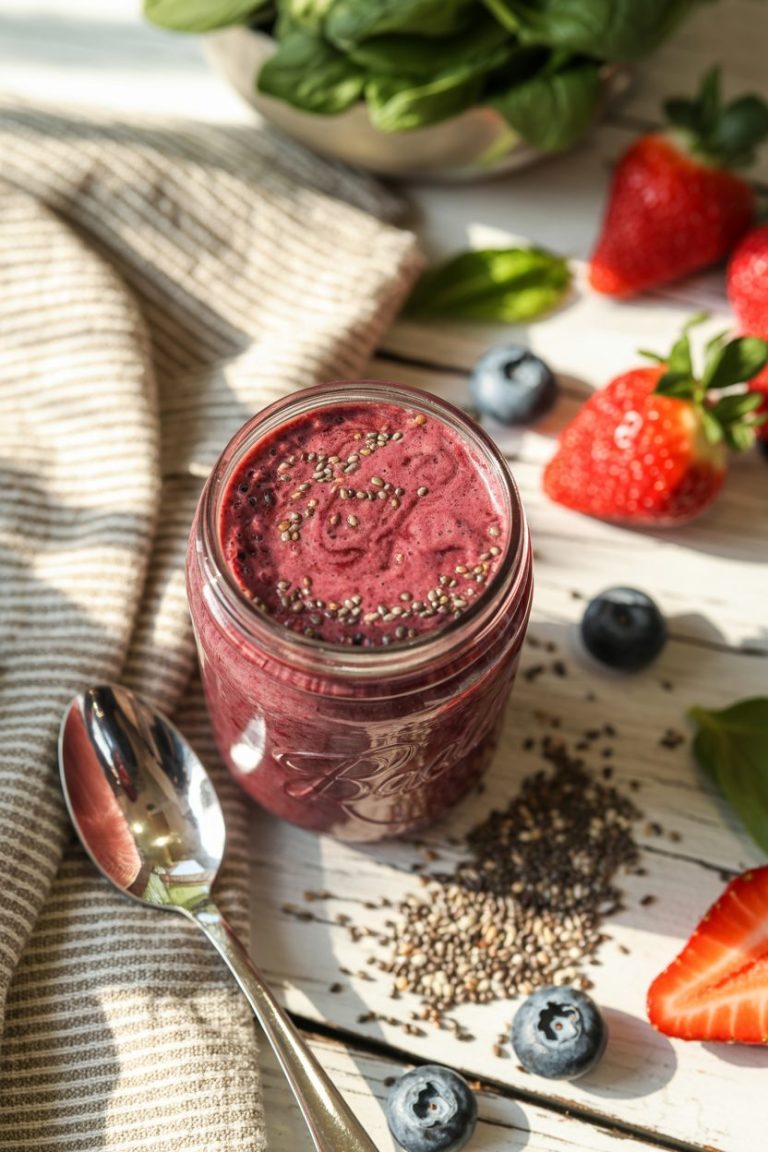
Strawberries, blueberries, raspberries, Greek yogurt, chia seeds, and honey. The combination of three different berries gives you a variety of antioxidants—different berries contain different beneficial compounds.
Berries are legitimately one of the healthiest foods you can eat. They’re loaded with fiber, vitamin C, and anthocyanins—the compounds that give them their bright colors and also provide anti-inflammatory benefits.
Use frozen berries to make it thick and frosty without needing ice. Plus frozen berries are picked at peak ripeness, which often means they’re more nutritious than “fresh” berries that traveled for days before reaching your grocery store.
Goji Berry Immune Booster
Goji berries, orange juice, banana, vanilla yogurt, and a touch of ginger. Goji berries taste slightly sweet and tangy—kind of like a cross between a cranberry and a cherry.
Soak the dried goji berries in warm water for 10 minutes before blending or they’ll be chewy and weird. The soaking water is fine to add to your smoothie—it contains nutrients from the berries anyway.
Goji berries contain vitamin A, vitamin C, and antioxidants. They’re also expensive, so use them sparingly unless you’re made of money or have rich relatives who gift you superfoods for holidays.
Speaking of antioxidant-rich drinks, you might also love these berry breakfast bowls or this mixed berry chia pudding—both pack similar nutritional benefits in different formats.
Green Superfood Smoothies That Don’t Taste Like Grass
Spirulina Tropical Green
Spirulina powder, frozen mango, frozen pineapple, coconut water, squeeze of lime. The tropical fruit completely masks the spirulina flavor, which is good because spirulina tastes like a pond had an identity crisis.
Spirulina is blue-green algae that’s ridiculously high in protein—about 4 grams per tablespoon. It also contains B vitamins, iron, and antioxidants. Start with a quarter teaspoon if you’re new to it, then work your way up.
The smoothie turns this gorgeous blue-green color that looks either appetizing or alarming depending on your relationship with green beverages. I’m firmly in the “appetizing” camp, but I understand the skepticism.
Matcha Green Tea Energizer
Matcha powder, banana, spinach, almond milk, vanilla protein powder, and honey. The matcha provides caffeine and antioxidants—specifically EGCG, which has been studied for various health benefits.
Use ceremonial grade matcha if you can afford it, culinary grade if you can’t. The ceremonial stuff tastes smoother and less bitter. Either way, don’t use more than a teaspoon or your smoothie will taste like you’re drinking a lawn.
This is my replacement for morning coffee on days when I need caffeine but also want to feel like a wellness person who has their life together. Fake it till you make it, right?
Kale Pineapple Paradise
Kale, frozen pineapple, banana, coconut milk, chia seeds, touch of honey. The pineapple is sweet enough to cover the kale, and the banana makes everything creamy.
Remove the kale stems before blending—they’re tough and bitter and will ruin your smoothie. Just tear the leafy parts off the stems and compost the rest. Your blender and your taste buds will thank you.
Kale is loaded with vitamins A, C, and K, plus fiber and antioxidants. It’s also trendy enough that drinking it makes you feel like you’re participating in wellness culture, which is half the battle some mornings.
Protein-Packed Superfood Blends
Cacao Almond Butter Power Shake
Raw cacao powder, almond butter, banana, dates, almond milk, and a scoop of vanilla protein powder. This tastes like a chocolate shake but it’s actually nutritious, which feels like cheating the system.
Cacao is different from cocoa—it’s less processed and retains more antioxidants and minerals like magnesium and iron. It’s also more expensive, so if you’re on a budget, regular cocoa works fine and still tastes good.
I use this natural almond butter that’s just almonds and salt—no added sugar or oils. The dates provide natural sweetness while adding fiber and potassium. Blend until completely smooth or you’ll get date chunks, which is a texture situation not everyone appreciates. Get Full Recipe
Hemp Seed Green Protein
Hemp seeds, spinach, frozen mango, Greek yogurt, almond milk. Hemp seeds bring complete protein—all nine essential amino acids—plus omega-3 and omega-6 fatty acids in a good ratio.
Hemp seeds taste mildly nutty and blend easily. They’re also naturally gluten-free and work well for people with nut allergies who can’t do almond or peanut butter.
Studies show that hemp protein is highly digestible and particularly beneficial for muscle recovery. According to research published in the Journal of Agricultural and Food Chemistry, hemp protein contains bioactive compounds that may have additional health benefits beyond basic nutrition.
Peanut Butter Flax Power Blend
Peanut butter, ground flaxseed, banana, oats, cinnamon, almond milk, and honey. The flaxseed adds omega-3s and fiber without affecting the flavor much.
Grind whole flax seeds fresh or buy pre-ground—whole seeds pass through your digestive system intact without releasing their nutrients. Keep ground flax in the freezer to prevent it from going rancid.
This smoothie is thick enough to eat with a spoon and filling enough to actually count as breakfast. The oats add complex carbs and make it more substantial than fruit-only smoothies.
If you’re into protein-heavy breakfast options, these high-protein overnight oats or this Greek yogurt parfait guide hit similar nutritional goals in different formats.
Inflammation-Fighting Golden Smoothies
Turmeric Golden Milk Smoothie
Turmeric powder, ginger, cinnamon, banana, dates, coconut milk, black pepper. The black pepper is crucial—it increases turmeric absorption by up to 2000%, which sounds fake but is actually backed by science.
Turmeric contains curcumin, a compound studied extensively for its anti-inflammatory properties. The research is still ongoing, but the existing studies are promising enough that adding turmeric to smoothies seems like a low-risk, potentially high-reward situation.
Fair warning: turmeric stains everything it touches. Use this stain-resistant blender cup if you value your countertops. Or just accept that your blender will have a permanent yellowish tint and embrace the chaos.
Mango Turmeric Anti-Inflammatory
Frozen mango, fresh turmeric root (or powder), coconut yogurt, honey, lime juice, pinch of black pepper. The mango sweetness balances the earthy turmeric perfectly.
Fresh turmeric root looks like small orange ginger roots and has a more vibrant flavor than powder. Peel it with a spoon like you would ginger, then grate or chop it before blending.
Wear gloves when handling fresh turmeric or prepare for orange fingers that last for days. Learn from my mistakes—I looked like I’d been fighting Cheetos for three days after my first fresh turmeric smoothie adventure.
Golden Pineapple Immune Booster
Pineapple, turmeric, ginger, carrot, coconut water, honey. The pineapple brings bromelain, an enzyme with anti-inflammatory properties, while the turmeric and ginger add their own anti-inflammatory compounds.
This combination tastes tropical and slightly spicy rather than medicinal. The carrot adds beta-carotene and natural sweetness without making it taste like you’re drinking vegetable juice.
I make this when I feel like I’m getting sick or after particularly intense workouts. Does it actually help? Hard to say definitively, but it tastes good and contains actual nutrients, so worst case scenario I’m drinking a tasty smoothie.
Chocolate and Dessert-Inspired Superfood Smoothies
Dark Chocolate Cherry Recovery
Frozen cherries, raw cacao powder, banana, almond butter, almond milk, vanilla extract. Cherries contain anthocyanins and other compounds that may help reduce muscle soreness and inflammation.
Tart cherries have been studied specifically for post-exercise recovery. The research is promising but not conclusive—basically, it might help and definitely won’t hurt, plus it tastes like chocolate-covered cherries.
Use this cherry pitter if you’re working with fresh cherries because pitting them by hand is tedious and your fingers will look like a crime scene. Frozen pitted cherries exist and save you from this drama entirely.
Cacao Maca Mood Booster
Cacao powder, maca powder, banana, peanut butter, dates, almond milk. Maca is a root vegetable powder that supposedly helps with energy and mood, though the research is mixed.
Maca tastes slightly malty and butterscotch-like. Start with half a teaspoon because the flavor is strong and not everyone loves it. Work your way up to a full teaspoon once you know you like it.
This smoothie tastes like a peanut butter cup and contains actual nutrition, which is the sweet spot between indulgence and health. IMO, if a smoothie tastes like dessert but contains protein and fiber, you’re winning.
Mint Chocolate Chip Protein
Spinach (for color—you won’t taste it), fresh mint leaves, cacao nibs, chocolate protein powder, banana, almond milk. It tastes exactly like mint chocolate chip ice cream but it’s breakfast and nobody can stop you. Get Full Recipe
The fresh mint is key—don’t use mint extract or it’ll taste like toothpaste. Five to seven fresh mint leaves provide plenty of flavor without overwhelming everything else.
Cacao nibs add crunch and additional antioxidants. They’re basically chocolate chips that haven’t been processed with sugar yet—slightly bitter but surprisingly good when combined with sweet ingredients.
For more chocolate-heavy breakfast ideas, try this chocolate chia pudding or these cacao energy balls—both satisfy chocolate cravings while delivering actual nutrition.
Tropical Superfood Paradise Smoothies
Dragon Fruit Pink Smoothie
Frozen dragon fruit (pitaya), banana, mango, coconut milk, lime juice. Dragon fruit is mild-flavored but loaded with antioxidants, fiber, and magnesium. It also turns everything bright pink, which is reason enough to use it.
Dragon fruit comes in pink and white varieties—pink has more antioxidants and makes prettier smoothies. You can find it frozen in most health food stores and increasingly in regular grocery stores.
The flavor is subtle, almost like a mild kiwi. It won’t overpower other ingredients, which makes it perfect for smoothie bases. The color though? Absolutely show-stopping and extremely Instagram-friendly.
Coconut Acai Tropical Blend
Acai, coconut milk, pineapple, mango, banana, shredded coconut. This tastes like vacation in a cup and contains enough antioxidants to justify calling it healthy.
Use full-fat coconut milk for the creamiest texture. Light coconut milk saves calories but sacrifices the rich, creamy texture that makes tropical smoothies feel indulgent.
Top with toasted coconut flakes, fresh fruit, and this superfood granola for a smoothie bowl situation. The crunch contrast against the smooth base is weirdly satisfying.
Papaya Turmeric Digestive Support
Papaya, turmeric, ginger, lime juice, coconut water, honey. Papaya contains papain, an enzyme that aids digestion. Combined with ginger and turmeric, this smoothie is basically a digestive system pep talk.
Papaya tastes tropical and slightly sweet. Make sure it’s ripe—underripe papaya is bland and unpleasant. The flesh should be orange and yield slightly to pressure.
This is my go-to after heavy meals or when my stomach feels off. Does it actually help with digestion? The papain enzyme is real, so there’s actual science behind it, but mostly it just tastes good and doesn’t make things worse.
Energizing Morning Superfood Smoothies
Coffee Cacao Energy Bomb
Cold brew coffee, cacao powder, banana, dates, almond butter, almond milk, ice. This combines caffeine from coffee with theobromine from cacao for sustained energy without the crash.
Use strong cold brew or leftover coffee from yesterday. The coffee flavor should be noticeable but not overwhelming—you want chocolate-coffee balance, not coffee with a hint of chocolate.
I make this when I need breakfast and caffeine in one convenient package. It’s more filling than regular coffee and actually provides nutrition beyond just waking you up. FYI, this is particularly clutch on mornings when eating solid food sounds impossible.
Matcha Banana Green Energy
Matcha powder, banana, spinach, dates, almond milk, vanilla extract, ice. The matcha provides steady caffeine release while the banana and dates add natural sweetness and quick energy.
Matcha caffeine feels different than coffee caffeine—it’s steadier and less jittery because matcha also contains L-theanine, an amino acid that promotes calm focus. The combination creates alert relaxation, which sounds contradictory but actually works.
Blend the matcha with a bit of warm water first to prevent clumping, then add it to your smoothie. Or just dump everything in this powerful blender that pulverizes everything into submission regardless of technique.
Ginger Mango Wake-Up Call
Fresh ginger, frozen mango, orange juice, Greek yogurt, turmeric, honey. The ginger provides a slight kick that wakes you up, while the mango keeps it sweet and drinkable.
Fresh ginger is more vibrant than powdered. Peel a small knob of ginger with a spoon, chop it roughly, and let the blender do the work. Start with a quarter-inch piece and adjust based on your ginger tolerance.
This smoothie tastes bright and zippy—like morning sunshine in liquid form. The combination of sweet mango, tangy orange, and spicy ginger creates this complex flavor profile that’s way more interesting than basic fruit smoothies.
Antioxidant-Rich Berry and Seed Combos
Blueberry Flax Omega Boost
Blueberries, ground flaxseed, banana, vanilla Greek yogurt, almond milk, honey. Blueberries are among the highest antioxidant foods you can eat, and flax adds omega-3s and fiber.
Blueberries contain anthocyanins, the same compounds that give them their blue color and provide anti-inflammatory benefits. They also support brain health—studies suggest regular blueberry consumption may help maintain cognitive function as we age.
Use wild blueberries if you can find them frozen. They’re smaller than regular blueberries but contain even higher concentrations of antioxidants. Regular blueberries work fine too—this isn’t a competition, just an optimization opportunity.
Mixed Berry Chia Antioxidant
Strawberries, raspberries, blackberries, chia seeds, banana, coconut milk, maple syrup. The variety of berries provides different types of antioxidants and beneficial compounds.
Chia seeds gel up when they hit liquid, which thickens your smoothie and adds omega-3s. Let the smoothie sit for five minutes after blending if you want it extra thick—the chia seeds will continue absorbing liquid.
This tastes like berry sorbet but contains fiber, protein, and healthy fats. It’s sweet enough to feel like a treat without requiring a nap afterward. Get Full Recipe
Pomegranate Berry Power
Pomegranate juice, mixed berries, banana, Greek yogurt, honey. Pomegranate is loaded with antioxidants—specifically punicalagins and anthocyanins that are being studied for various health benefits.
Use 100% pomegranate juice without added sugars. The stuff is expensive but you only need half a cup. It provides this tart, complex flavor that’s distinctly different from other fruits.
The bright red color comes from the same compounds that provide health benefits, which means the prettier the smoothie, the more antioxidants you’re getting. Vanity and health aligned for once.
Looking for more antioxidant-rich options? These berry breakfast parfaits or this mixed berry overnight oats guide both deliver similar benefits in different formats.
Gut-Health Supporting Superfood Smoothies
Probiotic Kefir Berry Blend
Kefir, mixed berries, banana, ground flaxseed, honey. Kefir is fermented milk that contains beneficial bacteria for gut health—like drinkable yogurt but with more diverse probiotic strains.
Kefir tastes tangy and slightly fizzy. If you’re not into the tang, the berries and banana cover it pretty well. Start with plain kefir rather than flavored versions to control the sugar content.
Gut health affects everything from digestion to mood to immune function. The research on probiotics is still evolving, but eating fermented foods regularly seems to be beneficial for most people.
Probiotic Mango Lassi Style
Kefir, frozen mango, cardamom, honey, splash of rose water if you’re feeling fancy. This is inspired by Indian mango lassi but with extra probiotics from the kefir.
Cardamom adds this warm, slightly citrusy flavor that pairs beautifully with mango. Use just a pinch—a quarter teaspoon is plenty. Too much cardamom tastes medicinal and overwhelming.
This smoothie feels exotic and special despite being ridiculously simple. The probiotics are a bonus—mostly I make this because it tastes like vacation and I enjoy pretending I’m somewhere tropical.
Banana Ginger Digestive Soother
Banana, fresh ginger, Greek yogurt, honey, almond milk, ice. Bananas are easy to digest and contain resistant starch that feeds beneficial gut bacteria. Ginger helps with nausea and digestion.
This is my go-to when my stomach is off but I still need to eat something. The banana provides energy without being heavy, and the ginger settles everything down.
Use ripe bananas with brown spots—they’re sweeter and easier to digest. The resistant starch content changes as bananas ripen, but ripe bananas are still beneficial and taste way better in smoothies.
Related Recipes You’ll Love
Want more superfood-packed breakfast options? Here are some recipes that’ll keep your mornings nutritious and delicious:
More Smoothie Variations:
- Green Smoothie Bowl Recipes
- Post-Workout Recovery Smoothies
Alternative Superfood Breakfasts:
- Acai Bowl Topping Ideas
- Chia Pudding Superfood Combinations
Meal Prep Solutions:
- Smoothie Prep Bags for Busy Mornings
- Make-Ahead Breakfast Bowl Guide
Making Superfood Smoothies Actually Sustainable
Here’s the reality: you don’t need every superfood to make a healthy smoothie. Start with basics like berries, greens, and chia seeds, then experiment with fancier ingredients as your budget and interest allow.
Stock your freezer with these essentials:
- Mixed berries
- Frozen banana chunks
- Frozen mango and pineapple
- Spinach or kale
Keep these in your pantry:
- Chia seeds and ground flaxseed
- Raw cacao powder
- Protein powder you actually like
- Natural nut butters
Invest in decent equipment. A cheap blender will struggle with frozen fruit and leave you with chunky disappointment. You don’t need the most expensive model, but this mid-range blender handles frozen ingredients well without costing as much as a used car.
Prep smoothie bags on Sunday. Portion all your ingredients except liquid into freezer bags. When you want a smoothie, dump one bag in the blender with liquid and go. It’s meal prep for people who hate meal prep.
Don’t stress about perfection. Missing spirulina won’t ruin your smoothie. Can’t afford maca powder? Your banana-berry smoothie is still nutritious. The superfoods are bonuses, not requirements.
The goal is finding smoothie combinations you actually want to drink regularly. If a smoothie tastes terrible but contains seventeen superfoods, you won’t drink it consistently. But if it tastes great and happens to be packed with nutrition? You’ll make it every week without feeling like you’re forcing yourself to be healthy.
These 20 recipes prove that superfood smoothies can taste legitimately good while delivering real nutritional benefits. No weird ingredients that require a specialty store. No flavors that make you question your choices. Just smoothies that happen to be good for you and taste good enough that you’d drink them anyway.
Now grab your blender and make something that’s both delicious and nutritious. That’s the whole point of this exercise.