25 Green Smoothies That Actually Taste Good
Let’s address the elephant in the room—most green smoothies taste like you’re drinking a salad, and not in a good way. That grassy, bitter, “why am I doing this to myself” flavor that makes you question all your life choices. I’ve been there, choking down spinach smoothies that tasted like liquified lawn clippings because someone on the internet said they were good for me.
Here’s what nobody tells you: green smoothies can actually taste amazing if you know how to balance the flavors. The secret isn’t adding more fruit until you can’t taste the greens anymore (though that helps). It’s about understanding which greens taste mild, which fruits mask bitterness best, and how to add flavors that make the whole thing delicious instead of just tolerable.
I’ve tested probably a hundred green smoothie combinations over the years, and these 25 recipes are the ones I actually make repeatedly. Not the ones that taste “good for a green smoothie” but legitimately good, period. The kind where you finish the glass and think “I’d drink that again” instead of “well, I survived it.”
The Foundation: Which Greens Actually Work
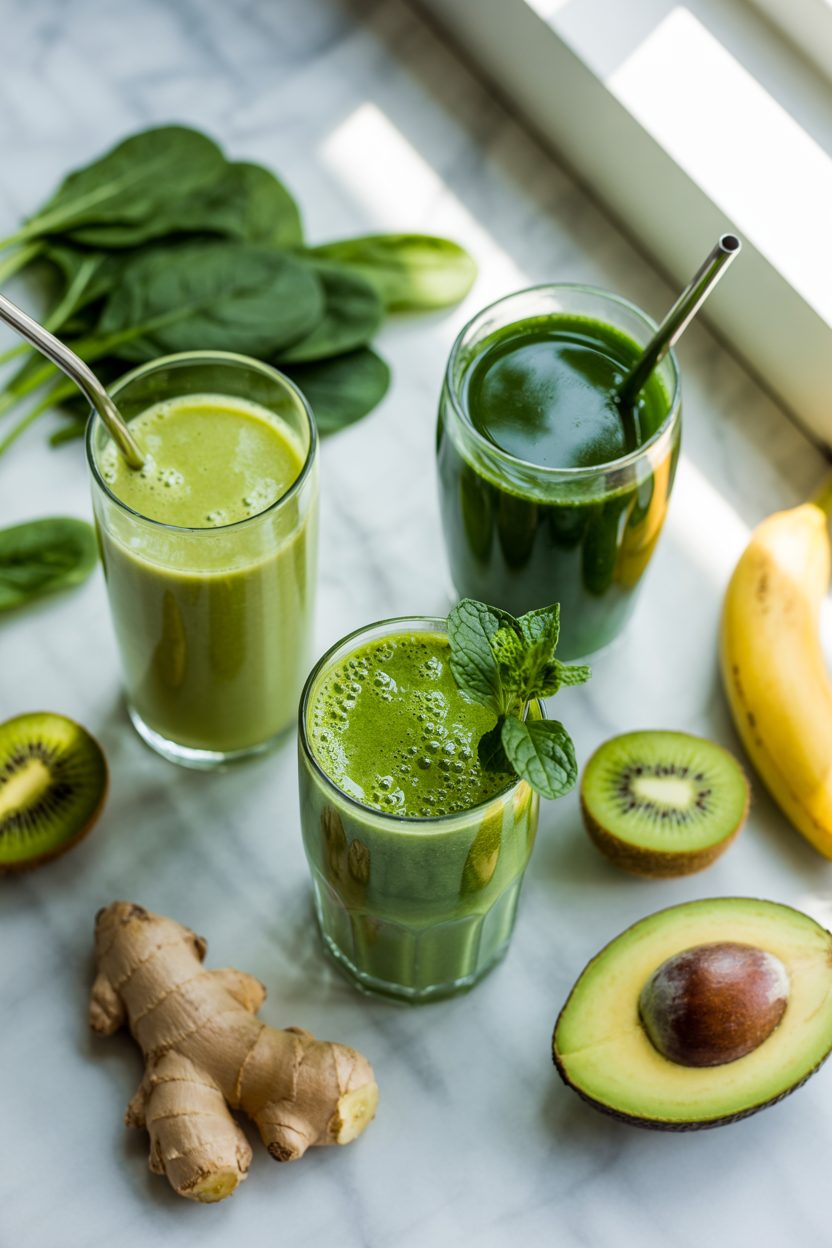
Not all greens are created equal when it comes to smoothies. Some taste mild and blend smoothly, others taste aggressively vegetable-y and make everything bitter.
Spinach is your best friend here. It’s mild, blends smooth, and you genuinely can’t taste it when you pair it with the right fruits. I buy the big tubs of baby spinach and throw handfuls into everything.
Kale has a stronger flavor and tougher texture. If you’re using it, go with baby kale leaves (not the stems), and make sure you have a powerful blender. I use this high-speed blender because cheaper ones leave kale chunks, and nobody wants to chew their smoothie.
Romaine sounds weird but works great—mild flavor, high water content, blends easily. Swiss chard and arugula are too bitter for most people. Save those for actual salads.
Tropical Green Machine
Spinach, frozen mango, pineapple, banana, and coconut water. The tropical fruits completely mask the spinach, and you end up with this sunny yellow-green color that doesn’t look aggressively healthy.
The pineapple adds tartness that balances the sweet mango and banana. Coconut water keeps it light and adds electrolytes without the heaviness of milk.
This is my gateway green smoothie—the one I make for people who swear they hate green smoothies. It changes minds.
Mint Chocolate Chip
Spinach (for the green color), frozen banana, cocoa powder, peppermint extract, vanilla protein powder, and almond milk. Tastes exactly like mint chocolate chip ice cream, happens to contain vegetables.
The cocoa powder is doing heavy lifting here, completely masking any vegetable flavor. I use this Dutch-process cocoa because it’s less acidic and creates a smoother chocolate flavor.
Top with chocolate chips if you’re feeling fancy. The mint-chocolate combo never fails, and the spinach just contributes color without affecting taste.
Peanut Butter Green Smoothie
Spinach, frozen banana, peanut butter, cocoa powder, and milk of your choice. The peanut butter adds richness and protein, making this actually filling instead of just a drink.
I use about two tablespoons of peanut butter per smoothie. Any more and it gets too thick, any less and you lose that rich peanut flavor that makes this special.
Get Full Recipe.
Green Piña Colada
Spinach, frozen pineapple, coconut milk, banana, and a squeeze of lime. Tastes like vacation, looks like you’re being healthy, contains actual nutrients.
The coconut milk makes this creamy and tropical without any dairy. I use the full-fat stuff from a can—none of that watered-down carton coconut milk.
Add a handful of ice and this becomes thick enough to eat with a spoon like a smoothie bowl.
According to research on leafy green consumption, greens like spinach provide vitamins A, C, and K, plus minerals and fiber—but getting people to actually eat them requires making them taste good, which is exactly what these smoothies accomplish.
If you’re into tropical breakfast vibes, you might also love tropical smoothie bowls and coconut-based breakfast recipes that deliver similar island flavors with the same nutritional benefits.
Berry Green Blast
Mixed berries (strawberries, blueberries, raspberries), spinach, banana, Greek yogurt, and a splash of orange juice. The berries turn everything purple-ish, so it doesn’t even look super green.
The Greek yogurt adds protein and creates this creamy texture that makes it feel more substantial. Aim for yogurt with at least 15 grams of protein per serving.
This one’s particularly good for kids who are suspicious of green smoothies. The color is more purple than green, and it tastes like a berry milkshake.
Mango Ginger Green
Spinach, frozen mango, fresh ginger, lime juice, and coconut water. The ginger adds this zingy kick that wakes up your taste buds and aids digestion.
Start with a small piece of ginger—maybe half an inch—and adjust from there. Fresh ginger is powerful stuff, and you can always add more but you can’t take it out.
I keep fresh ginger in the freezer and grate it directly into smoothies. Way easier than trying to peel and chop it, and frozen ginger grates like a dream.
Apple Cinnamon Green
Spinach, apple (any variety works), banana, cinnamon, almond milk, and a handful of oats. Tastes like apple pie in smoothie form, somehow contains vegetables.
The oats make this super filling and add fiber. I use rolled oats, not steel-cut (those don’t blend well). Throw them in dry and let your blender do the work.
Add a tiny pinch of nutmeg if you want to get fancy. The warm spices make this feel cozy even though you’re drinking it cold.
Avocado Green Dream
This one’s different—avocado instead of banana for creaminess. Spinach, avocado, mango, lime juice, and coconut water. The avocado creates this silky texture without adding any avocado flavor.
Use about a quarter to half an avocado depending on how thick you want it. The healthy fats keep you full for hours.
The lime juice is crucial here—it brightens everything up and keeps the avocado from turning brown if you’re prepping ahead.
Green Smoothie Cleanse
Spinach, cucumber, celery, green apple, lemon juice, and fresh ginger. This one’s more vegetable-forward but still tastes refreshing instead of punishing.
The apple adds enough sweetness to balance the vegetables, and the lemon brightens everything. The cucumber adds hydration without much flavor.
I drink this when I’ve been eating like garbage and want to feel virtuous. It’s like a reset button in liquid form.
Peach Green Smoothie
Spinach, frozen peaches, banana, vanilla Greek yogurt, and a splash of orange juice. The peaches create this gorgeous coral-green color and add natural sweetness.
Frozen peaches work better than fresh for smoothies—better texture, available year-round, and no peeling required. I keep these frozen peach slices stocked in my freezer.
The vanilla yogurt adds subtle flavor that complements the peaches perfectly. This tastes like a creamsicle that happens to be healthy.
Speaking of stone fruit recipes, check out peach breakfast smoothies and summer fruit bowls for more ways to use seasonal produce in your morning routine.
Kiwi Lime Green
Baby kale, kiwi, banana, lime juice, spinach, and coconut water. The kiwi adds tartness and beautiful green color while masking the kale flavor.
Kiwi is one of those underrated smoothie fruits—it’s tart, sweet, packed with vitamin C, and blends beautifully. Don’t bother peeling it if you have a good blender; the skin is edible and has fiber.
This one’s refreshing and zippy, perfect for mornings when you need something that wakes you up.
Chocolate Almond Green
Spinach, frozen banana, almond butter, cocoa powder, almond milk, and a date for sweetness. The almond butter adds richness and pairs beautifully with chocolate.
I use Medjool dates because they’re naturally sweet and blend smoothly. One or two dates is usually enough to sweeten a smoothie without adding refined sugar.
The chocolate-almond combo is classic for a reason. This tastes indulgent while still being nutritious.
Green Protein Power
Spinach, banana, vanilla protein powder, peanut butter, oats, and milk. This is my post-workout smoothie—packed with protein, carbs, and healthy fats.
I aim for about 30 grams of protein in this one between the protein powder, peanut butter, and milk. It keeps me full for hours and helps with recovery.
The oats add thickness and slow-releasing carbs. This isn’t just a drink; it’s an actual meal replacement that tastes good.
Strawberry Banana Green
The classic flavor combo everyone loves, now with spinach. Frozen strawberries, banana, spinach, Greek yogurt, and a splash of milk.
This is probably the most popular green smoothie flavor for a reason—it works, it tastes familiar, and the strawberries completely hide the spinach.
I use frozen strawberries because they make the smoothie thick and cold without watering it down with ice. Plus they’re way cheaper than fresh and available year-round.
Blueberry Green Smoothie
Spinach, frozen blueberries, banana, vanilla extract, and almond milk. The blueberries turn everything purple, so this barely looks green at all.
Blueberries are antioxidant powerhouses, and they pair well with basically everything. The vanilla extract adds depth without being obvious.
This one’s naturally sweet enough that you don’t need to add any sweetener. The banana and blueberries handle it.
Matcha Green Smoothie
Spinach, matcha powder, banana, vanilla protein powder, almond milk, and a touch of honey. Double green—matcha plus spinach—but the flavors actually complement each other.
Use good quality matcha here. Cheap matcha tastes bitter and grass-like. I use this ceremonial-grade matcha and it makes a massive difference.
The matcha provides caffeine for an energy boost without the coffee jitters. This is my Monday morning survival smoothie.
Get Full Recipe.
Pineapple Spinach Smoothie
Just spinach, frozen pineapple, banana, and coconut water. Super simple, super refreshing, and the pineapple completely dominates the flavor.
Pineapple is one of the best fruits for masking green flavors. It’s tart, sweet, and has strong enzymes that help with digestion.
Add a squeeze of lime if you want extra zing. The acidity brightens everything up.
For more pineapple-based breakfast ideas, try tropical breakfast smoothies and coconut pineapple recipes that capture the same island vibes with minimal ingredients.
Green Tea Smoothie
Brewed green tea (cooled), spinach, mango, banana, and a touch of honey. The green tea adds antioxidants and subtle flavor without overpowering everything.
Brew the tea strong and let it cool completely before using. Hot liquid will make your smoothie warm and weird.
This one’s lighter than milk-based smoothies, perfect for summer mornings when you want something refreshing.
Cucumber Melon Green
Spinach, cucumber, honeydew melon, lime juice, and fresh mint. Super hydrating, super refreshing, tastes like a spa in a glass.
The honeydew is naturally sweet and pairs beautifully with cucumber. Mint adds freshness without being overwhelming.
This is my hot weather smoothie—light, hydrating, and doesn’t sit heavy in your stomach.
Orange Mango Green
Spinach, mango, orange juice, banana, and Greek yogurt. The citrus and mango combination is unbeatable, and the color is this gorgeous sunny yellow-green.
I use fresh squeezed orange juice when I’m feeling fancy, but store-bought works fine. The vitamin C from the orange also helps your body absorb the iron from the spinach.
The yogurt adds creaminess and protein. This feels substantial enough to be breakfast.
Green Monster
Everything bagel—spinach, kale, banana, mango, pineapple, Greek yogurt, and coconut water. Multiple greens, multiple fruits, maximum nutrition.
Despite having both spinach and kale, this still tastes fruity and pleasant. The combination of tropical fruits masks the greens completely.
This is my “I ate terribly all weekend and need to course-correct” smoothie. It’s packed with nutrients but still tastes good enough that I actually drink it.
Vanilla Green Smoothie
Sometimes simple is best. Spinach, banana, vanilla extract, vanilla protein powder, and almond milk. The vanilla flavor is subtle but makes everything taste cohesive.
I use real vanilla extract, not imitation. The difference is noticeable. And I add more than you’d think—a full teaspoon for one smoothie.
This is a great base recipe that you can customize. Add berries, add nut butter, add cocoa powder—whatever sounds good.
Raspberry Green Smoothie
Spinach, frozen raspberries, banana, Greek yogurt, and almond milk. Raspberries are tart and assertive enough to completely mask the spinach flavor.
The seeds from raspberries can be slightly gritty if you have a weaker blender. If that bothers you, strain the smoothie through a fine mesh sieve. I use this fine mesh strainer when I’m feeling particular about texture.
The color is this gorgeous pink-purple that doesn’t look healthy at all, which somehow makes it taste better.
Cherry Green Smoothie
Spinach, frozen dark cherries, banana, cocoa powder, and almond milk. The cherries and chocolate create this decadent flavor that tastes like dessert.
Dark cherries have this rich, almost wine-like flavor that pairs beautifully with chocolate. Plus they’re packed with antioxidants.
This is thick enough to eat with a spoon if you use less liquid. Sometimes I make it as a smoothie bowl with granola on top.
Watermelon Green Refresher
Spinach, frozen watermelon chunks, lime juice, mint leaves, and a touch of honey. Super light, super refreshing, perfect for hot summer mornings.
Freeze your watermelon in chunks and use it like ice cubes. Creates the perfect texture without watering down the flavor.
The mint makes this taste fancy and spa-like. Just a few leaves—you don’t want it to taste like toothpaste.
Green Chai Smoothie
Spinach, banana, chai spice blend (or brew chai tea and cool it), Greek yogurt, and almond milk. The warm spices—cinnamon, cardamom, ginger, cloves—make this feel cozy even though it’s cold.
I either use this chai spice blend or brew a strong cup of chai tea and let it cool. Both work equally well.
This is my fall green smoothie—it has that comforting spice flavor without being heavy.
The Blending Technique That Matters
Here’s what most people get wrong: they dump everything in the blender at once and hope for the best. You end up with chunks of spinach stuck to the side and a smoothie with weird texture.
Do it this way instead: liquid first, then greens, then soft ingredients, then frozen stuff on top. This creates a vortex that pulls everything down into the blades.
Start on low speed to get things moving, then crank it to high for 30-60 seconds. A smooth green smoothie should be actually smooth—no chunks, no bits, no weird texture surprises.
If your smoothie is too thick, add liquid gradually—a tablespoon at a time. If it’s too thin, add more frozen fruit or a handful of ice.
The Sweetness Balance
Green smoothies need sweetness to balance the vegetables, but there’s a spectrum. Bananas add natural sweetness and creaminess—they’re my go-to. Dates work if you want to avoid banana. Honey or maple syrup if you need a little extra sweetness.
Avoid adding straight up sugar or artificial sweeteners. The point is to make something that tastes good AND is nutritious. Dumping in sweetener defeats half the purpose.
The frozen fruit is usually sweet enough on its own. Taste before you add anything extra. You can always add more sweetness but you can’t take it back out.
Prep and Storage
You can prep green smoothie bags—portion out all your ingredients into freezer bags, then dump a bag into the blender with liquid and blend. Takes five minutes of prep work on Sunday for a week of smoothies.
Don’t add the liquid to the bags before freezing. Just the greens and frozen fruit. Add the liquid right before blending.
Already-blended smoothies don’t keep well—they separate and oxidize. Make them fresh and drink them immediately for best flavor and nutrition. If you must store one, keep it in the fridge for no more than 24 hours in this airtight glass bottle.
Why Some Green Smoothies Fail
Using too many greens creates an overwhelming vegetable flavor. Start with one cup of packed greens per smoothie. You can increase gradually once you’re used to the taste.
Cheap blenders leave chunks. If you’re serious about green smoothies, invest in a decent blender. The difference is night and day.
Not using frozen fruit makes smoothies watery and warm. Frozen fruit creates that thick, cold consistency without needing tons of ice.
Forgetting acid is a common mistake. A squeeze of lemon or lime brightens flavors and balances sweetness. Don’t skip it.
Related Recipes You’ll Love
If green smoothies are your thing, here are more recipes that pack in the nutrients:
More Smoothie Options:
- protein smoothie recipes – higher protein versions that keep you full longer
- breakfast smoothie ideas – dozens of flavor combinations for morning fuel
Smoothie Bowl Variations:
- green smoothie bowls – same flavors but thick enough to eat with a spoon
- detox smoothie bowls – for when you want to feel extra virtuous
Complete Breakfast Guides:
- healthy breakfast smoothies – comprehensive guide to building nutritious smoothies
- make-ahead smoothie packs – detailed instructions for weekly smoothie prep
Final Thoughts
Green smoothies have a bad reputation because most people make them wrong—too much green, not enough flavor, bad texture. But when you balance the ingredients properly and use fruits that actually mask the vegetable taste, they can be legitimately delicious.
The key is not being a martyr about it. You don’t get extra credit for choking down something that tastes terrible. Make smoothies you actually enjoy drinking, and you’ll stick with them long-term.
Start with the fruit-heavy recipes—tropical green machine, berry green blast, or peanut butter green smoothie. These taste amazing even to green smoothie skeptics. Once you’re comfortable with those, you can gradually increase the green-to-fruit ratio or experiment with stronger-tasting greens like kale.
The nutrition is there whether your smoothie is 60% fruit or 40% fruit. Don’t stress about making it maximally healthy at the expense of actually drinking it. A smoothie you enjoy is infinitely better than a smoothie you force down and then never make again.
And remember—these recipes are starting points, not rules. Don’t like banana? Swap it for mango. Allergic to nuts? Use seeds instead. Want more protein? Add protein powder or Greek yogurt. The green smoothie police aren’t going to show up and cite you for modifications.
The best green smoothie is the one you’ll actually make and drink. Everything else is just details.